About Roatan

Roatan is one of three of The Bay Islands of Honduras located on the northern part of the country on the Caribbean.
The Reef
- Roatán sits directly on the Mesoamerican Barrier Reef.
- The reef stretches over 1,000 km (620 miles) through several countries.
- In many places around Roatán, the reef is only a short swim from shore.
Languages Spoken on Roatán
Many visitors are surprised that several languages are spoken:
- Spanish
- English
- Bay Islands English (a local English-based dialect)
- Garifuna
Many island families have spoken English for generations due to the island’s historical British influence.
Facts
- Roatán is the largest of Honduras’ Bay Islands.
- It is approximately 77 km (48 miles) long and 8 km (5 miles) at its widest point.
- Roatán is located about 65 km (40 miles) off the northern coast of Honduras in the Caribbean Sea.
- The island is part of the larger Mesoamerican Barrier Reef System, the second-largest coral reef system in the world after the Great Barrier Reef.
- Form of Currency in Roatan is the Honduran Lempira.
($1 = L27)
A Little History on Roatan
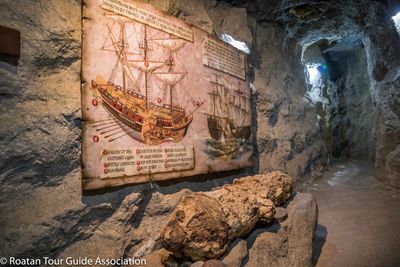
Early History
- Before Europeans arrived, the Bay Islands were inhabited by Indigenous peoples, including the Paya (Pech), Maya-related groups, and others involved in regional trade networks.
- In 1502, Christopher Columbus reached the Bay Islands during his fourth and final voyage to the Americas.
- The islands became important waypoints for shipping routes through the Caribbean.
The Pirate Era
- During the 1600s, Roatán became a refuge for pirates, privateers, and buccaneers.
- One of the most famous pirates associated with the Bay Islands was Henry Morgan, although stories about his exact activities on Roatán are often mixed with local legend.
- The island’s many coves, mangrove channels, and protected anchorages made it an ideal hiding place for ships.
British and Spanish Influence
- Control of the Bay Islands changed hands multiple times between Spain and Britain.
- British settlers established communities on the islands, and English became widely spoken.
- In 1859, Britain formally recognized Honduran sovereignty over the Bay Islands through the Wyke-Cruz Treaty.
The Garifuna Arrival
- In 1797, thousands of Garifuna people were deported from the island of St. Vincent by the British.
- Many settled along the Caribbean coast of Central America, including Roatán.
- The community of Punta Gorda, founded in 1797, is the oldest permanent settlement on Roatán.
- The Garifuna culture is known for its music, dance, drumming, language, and traditional foods.
Modern Roatan
- Until the late 20th century, Roatán was relatively isolated.
- Modern tourism began growing rapidly in the 1980s and 1990s.
- Today, diving, snorkeling, fishing, and cruise tourism are major industries.
- Roatán is one of the most visited cruise destinations in Central America.
- On busy days, several thousand cruise passengers may visit the island.
Fun Facts
1. The Water Changes Color
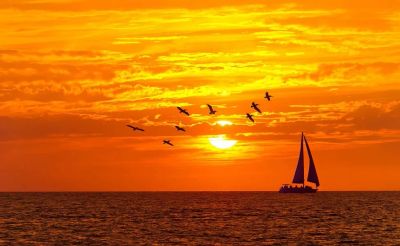
The Caribbean around Roatán appears in multiple shades of blue because of varying water depths and the white sandy bottom.
2. The Reef Is Extremely Close
In some locations, visitors can reach world-class snorkeling areas with just a short swim from shore.
3. No Large Rivers
Roatán has no major rivers. Most freshwater comes from rainfall and underground sources.
4. The Island Was Once Mostly Accessible by Boat
Many roads seen today did not exist a few decades ago. Residents often traveled by boat between communities.
5. Roatán Has a Strong Seafaring Tradition
Many islanders historically worked as fishermen, ship captains, sailors, and merchant mariners throughout the Caribbean.
6. The Bay Islands Have Their Own Accent
Many visitors notice that some islanders sound more Caribbean than mainland Hondurans because of the islands’ unique linguistic history.
7. Punta Gorda Is Older Than Many Caribbean Tourist Destinations
Founded in 1797, Punta Gorda has more than two centuries of continuous history.
8. The Reef Helps Protect the Island
The coral reef acts as a natural barrier that reduces wave energy before it reaches shore.
9. Roatán Is Mountainous
Although many visitors picture a flat tropical island, Roatán has hills and ridges offering spectacular views of both the north and south shores.
10. “Roatán” Has Had Many Spellings
Historical maps have shown the island with various spellings including Ruatan and Rattan.